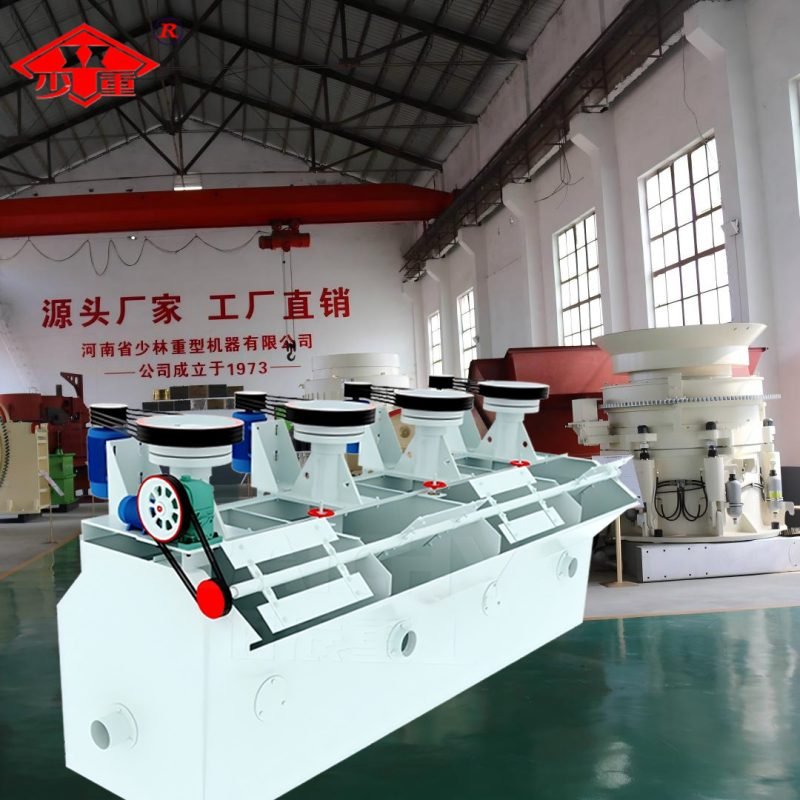
Product Overview
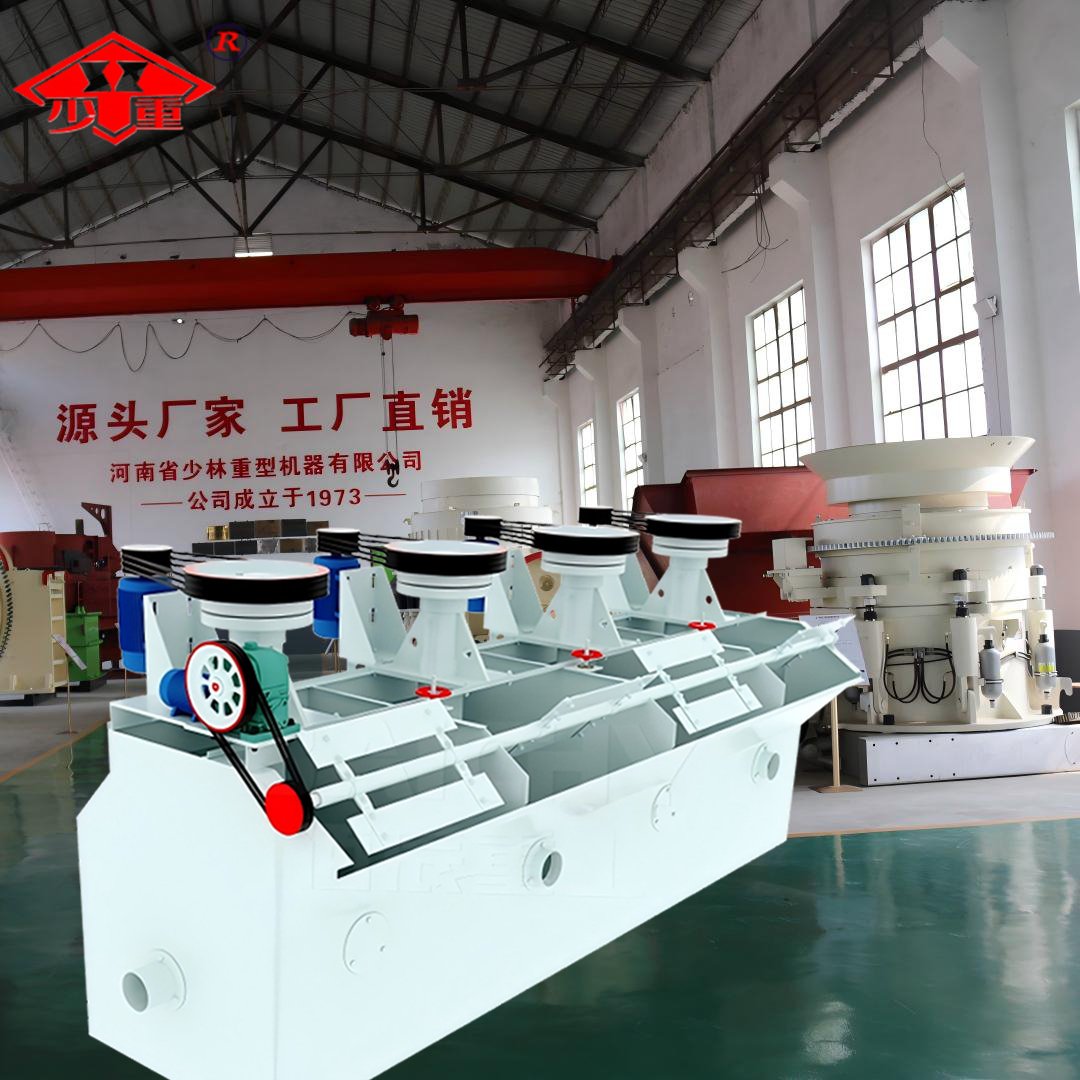
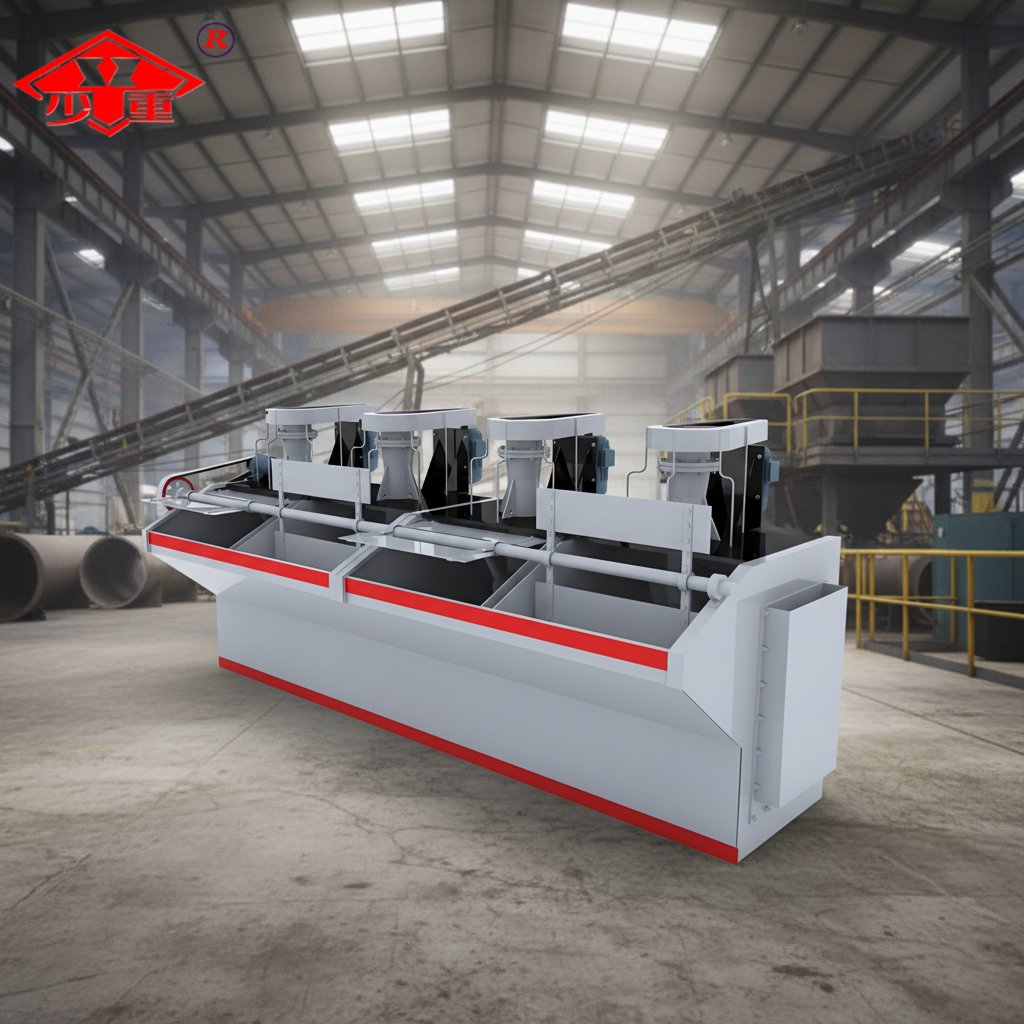
Flotation machine is a kind of mineral processing equipment that selectively attaches the target mineral particles to the bubbles by filling the slurry with air and generating a large number of bubbles, and floats up with the bubbles to the surface of the slurry to form a foam layer, so as to realize the separation of useful minerals from gangues. It is mainly divided into two categories: mechanical stirring flotation machine and inflatable flotation machine (such as flotation column). The flotation machine produced by our company has the advantages of reasonable structure, stable work, low energy consumption, and long life of wearing parts.
Application Scenarios:
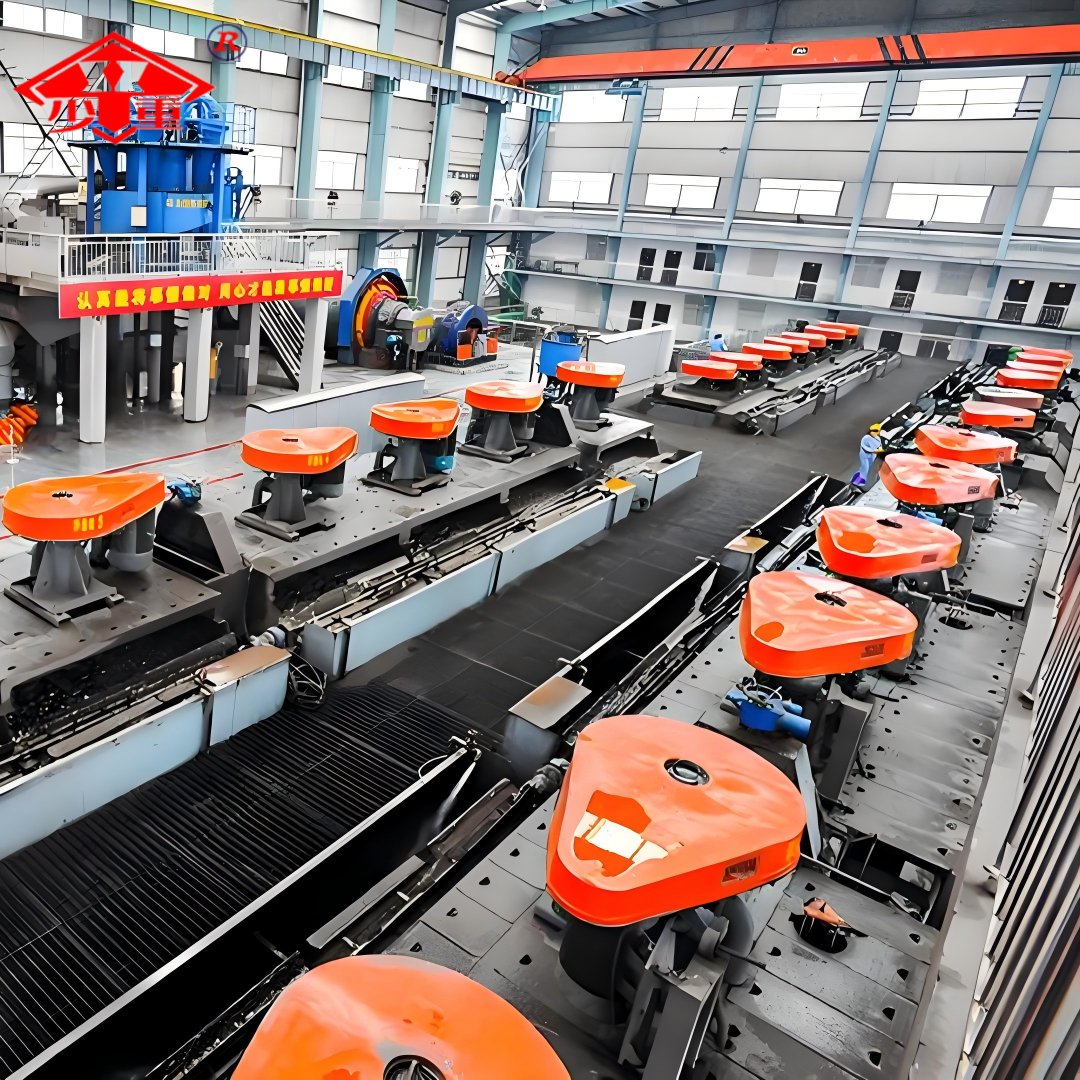
Concentrator: It is the main equipment in the flotation process of metal ore and non-metallic ore, which is used for roughing, selection and sweeping operations.
Resource recovery: Recover valuable components from industrial waste and tailings.
Environmental protection field: used for industrial wastewater treatment and material purification.
Working Principle
The working principle of the flotation machine is based on the difference in the physical and chemical properties of mineral particles, which is the key technology to achieve efficient separation of minerals. The sorting process is a continuous and precise physicochemical process, which can be divided into the following core steps:
1. Stirring and Mixing:
The motor drives the impeller to rotate at high speed through a transmission, creating a negative pressure zone under the fixed cover. This negative pressure effect simultaneously draws air from the intake pipe and slurry from the bottom of the tank. The strong stirring action of the impeller shears the air into a large number of fine bubbles, and makes the slurry, air and agent fully and evenly mixed, creating ideal conditions for the subsequent mineralization process.
2. Agent adsorption and modification:
Depending on the characteristics of the target mineral, specific flotation agents (e.g., collectors, foaming agents, modifiers) are pre-added to the slurry. These agents are selectively adsorbed on the surface of the target mineral, and by changing the physicochemical properties of the surface, their hydrophobicity (i.e., anaerobic aerophilicity) is significantly enhanced, and the effect on gangue minerals (waste rock) is small, thereby expanding the difference in the flotation of different minerals.
3. Bubble Mineralization and Attachment:
In a slurry that has been fully blended with chemicals, useful mineral particles with strong hydrophobic properties can firmly adhere to the bubble walls when colliding with the surrounding fine bubbles. Hydrophilic gangue particles are difficult to adhere to and flow with the slurry. This process of selective attachment of target minerals to bubbles, known as “bubble mineralization”, is the core link of flotation separation.
4. Mineralized bubbles rise and foam layer formation:
Because the density of bubbles is much smaller than that of slurry, the mineralized bubble group attached to useful minerals rises steadily to the surface of the slurry under the action of buoyancy. Numerous mineralized bubbles continue to converge here, forming a stable and mineral-rich foam layer.
5. Foam scraping separation from the product:
A rotating scraper mounted on the liquid surface continuously and smoothly scrapes the foam layer rich in the target mineral out of the tank, which is a concentrate. The gangue particles that fail to adhere to the bubbles and remain in the slurry are discharged from the discharge port at the bottom of the trough as tailings, so as to realize the effective separation of useful minerals and gangue minerals, and complete the whole sorting process.
The core components of the flotation machine
1. Tank body
The container for the slurry, usually square or round, is lined with wear-resistant material.
2. Mixing mechanism
The core components include the motor, spindle, impeller, and stator. Responsible for inhaling, stirring, and dispersing bubbles.
3. Inflatable system
For flotation machines with external air supply, including intake pipes and control valves.
4. Scraper system
Driven by a motor, it is used to smoothly scrape out the foam (concentrate) floating on the liquid surface.
5. Liquid level control device
It is usually a gate or automatic control valve, which is used to adjust the level of liquid level in the tank and control the thickness of the foam layer.
6. Hollow shaft or deflector
For suction air and circulating slurry.