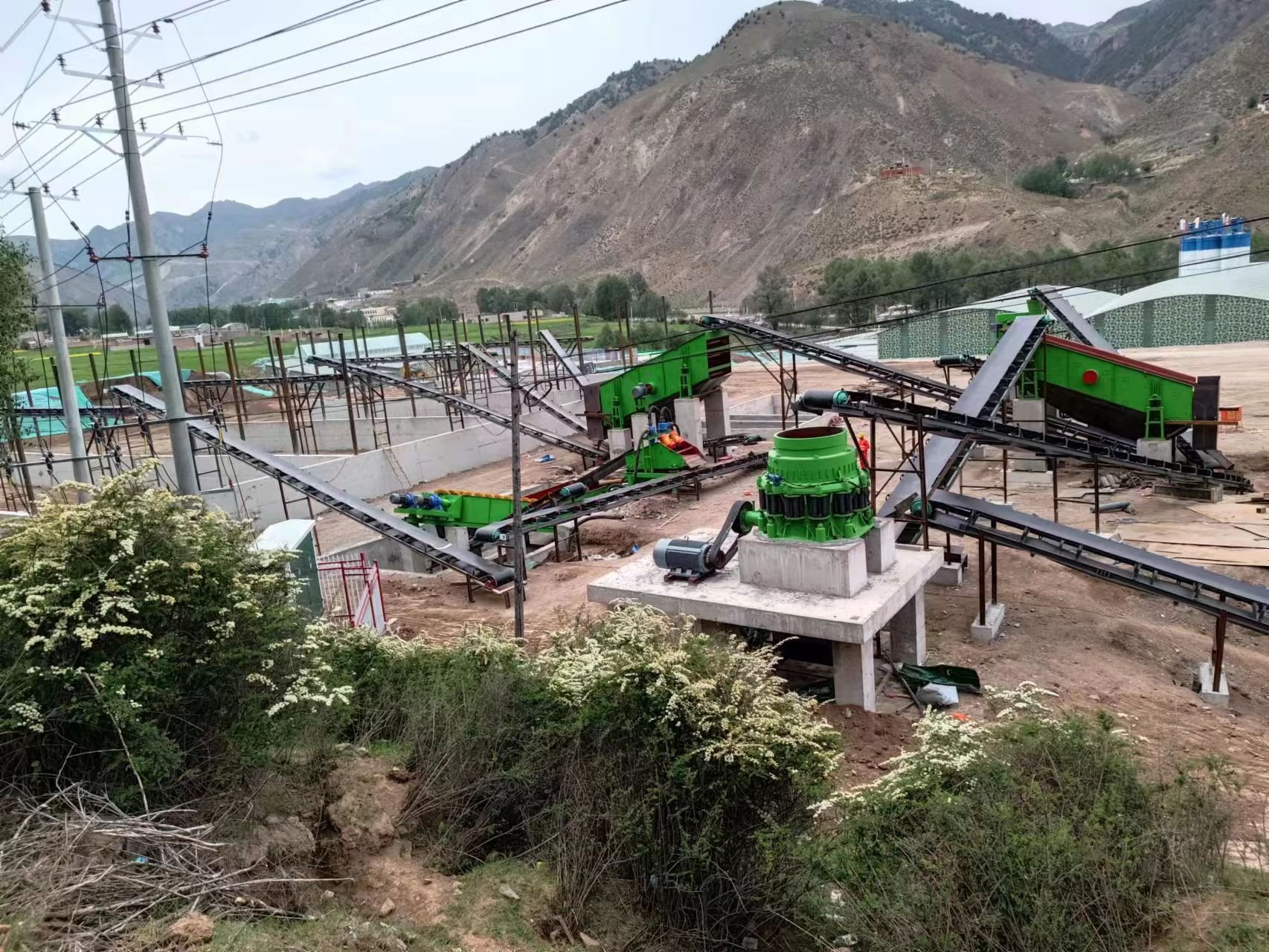
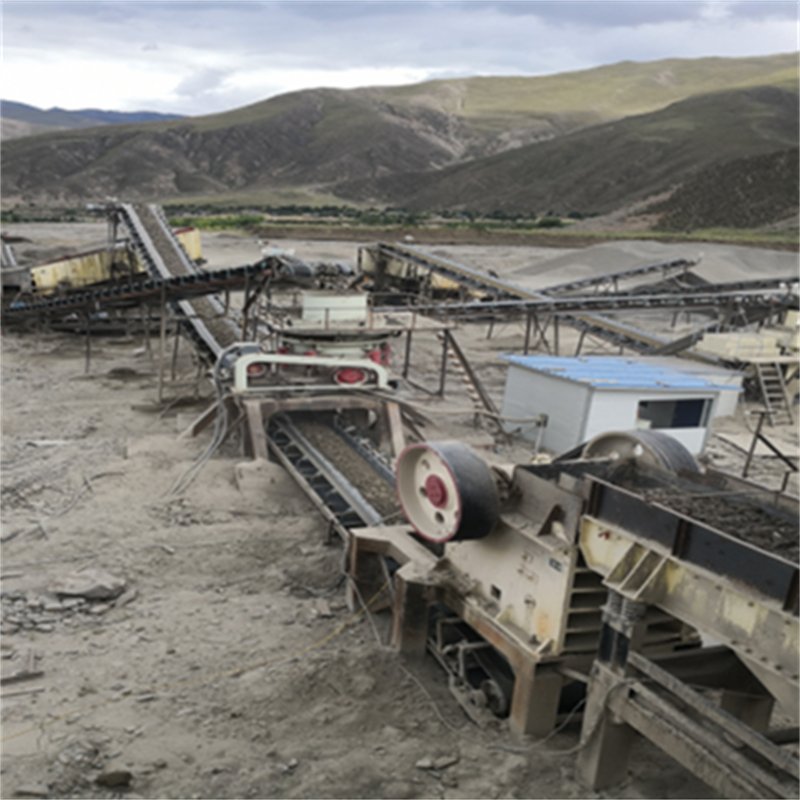
In the sand and gravel aggregate industry, the production line with an output of 80-100 tons per hour belongs to a typical “small scale” configuration. Although this capacity range is not large, it occupies an extremely important market position – it is not only the starting scale of many private sand and gravel enterprises, but also the standard raw material workshop of concrete batching plants and dry mix mortar plants, and the self-sufficient guarantee for infrastructure projects in remote areas. As a mine crushing and grinding equipment manufacturer with 20 years of experience, we deeply understand the core demands of small project investors for “low investment, quick results, and easy operation”. With its moderate investment threshold, mature and stable process and rapid return, the 80-100t fixed production line has become the “first production line” and “golden scale choice” for countless sand and gravel practitioners.
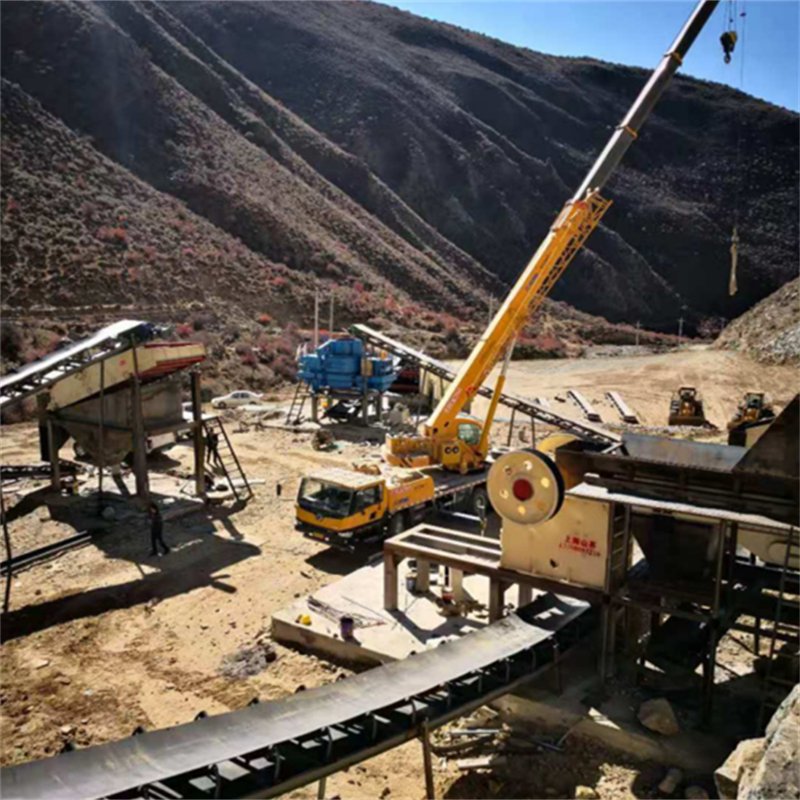
What equipment comprises an 80-100 tonne fixed production line?
A typical 80-100t stationary production line typically includes:
- Feeding system: vibrating feeder (such as ZSW380×96)
- Coarse crushing system: jaw crusher (e.g. PE500×750 or PE600×900)
- Medium and fine crushing system: according to the hardness of the material, you can choose to break back or small cone breaking
- Screening system: vibrating screen (e.g. 3YK1548 or 4YK1848)
- Conveyor system: multiple belt conveyor
- Control system: centralized electronic control cabinet
The production line can handle a wide range of materials, including limestone, dolomite, granite, basalt, river pebbles, construction waste, etc., the feed particle size is generally required ≤ 630-750mm, and the finished product can produce 0-5mm, 5-10mm, 10-20mm, 20-30mm and other aggregates according to the demand.
The three mainstream configuration schemes of 80-100t fixed production lines
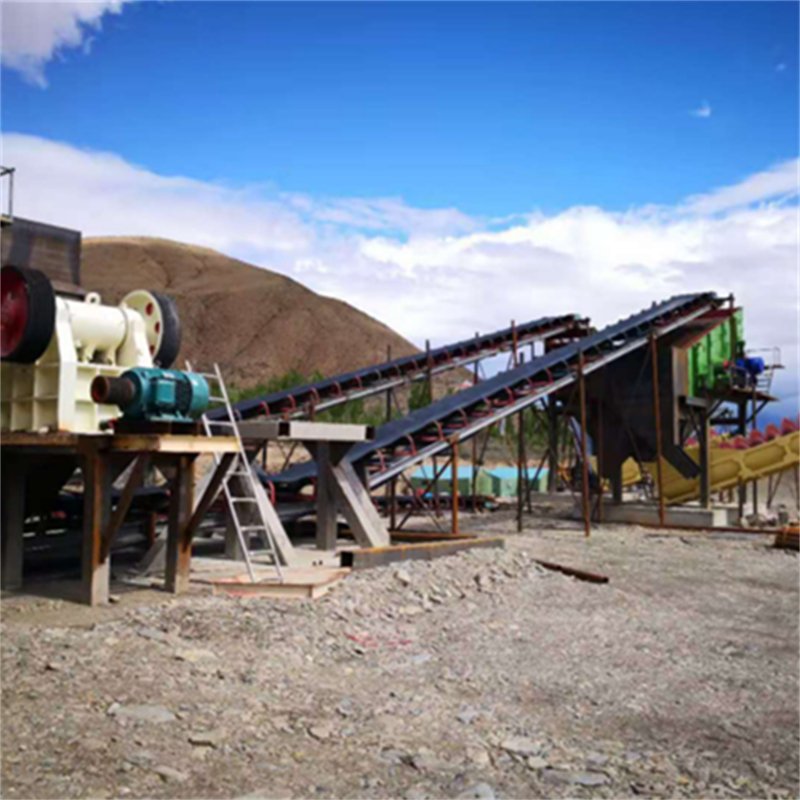
Scheme 1: Hard rock crushing scheme (jaw breaking + spring cone breaking)
For high-hardness materials such as granite, basalt, river pebbles (compressive strength ≥ 200MPa), it is recommended to use the classic configuration of “jaw crusher + spring cone crusher”.
Process flow: The large stone is uniformly fed into the jaw crusher by the vibrating feeder through the silo for coarse crushing, and the coarsely crushed material enters the cone crusher for fine crushing, and the crushed material is graded by the vibrating screen to screen out the finished aggregate of different specifications. The large material on the screen can be returned to the cone to crush again, forming a closed circuit cycle.
Solution advantages: The spring cone breaking structure is simple and reliable, adopts the principle of lamination crushing, the wear parts have a long life, and the operation is stable, especially suitable for the long-term production of small hard rock projects.
Scheme 2: Soft rock crushing scheme (jaw breaking + counterattack breaking/hammer breaking)
For materials of medium hardness and below such as limestone, dolomite, gypsum (compressive strength ≤ 150MPa), it is recommended to use the configuration of “jaw crusher + impact crusher” or “single-stage hammer crushing”.
Advantages of the scheme: the finished product of the counter-breaking scheme has excellent particle shape, high cube content and low needle flake content; The single-stage hammering scheme has the shortest process flow and the lowest investment, and can crush large pieces of raw ore to the finished particle size at one time, which is especially suitable for limestone mines
Scheme 3: Sand production line scheme (jaw breaking + sand making machine)
For projects with the main goal of producing machine-made sand, the two-stage crushing scheme of “jaw breaking + sand making machine” can be adopted.
Finished product specifications: It can produce 0-2.36mm, 2.36-4.75mm and other specifications of machine-made sand, and the fineness modulus is adjustable from 2.3 to 3.0.
Scheme advantages: The sand making machine adopts the principle of “stone beating”, and the finished sand has a rounded shape, excellent gradation and high value. With the sand washing machine, clean sand can be produced to meet the requirements of high-standard concrete sand.
Related posts
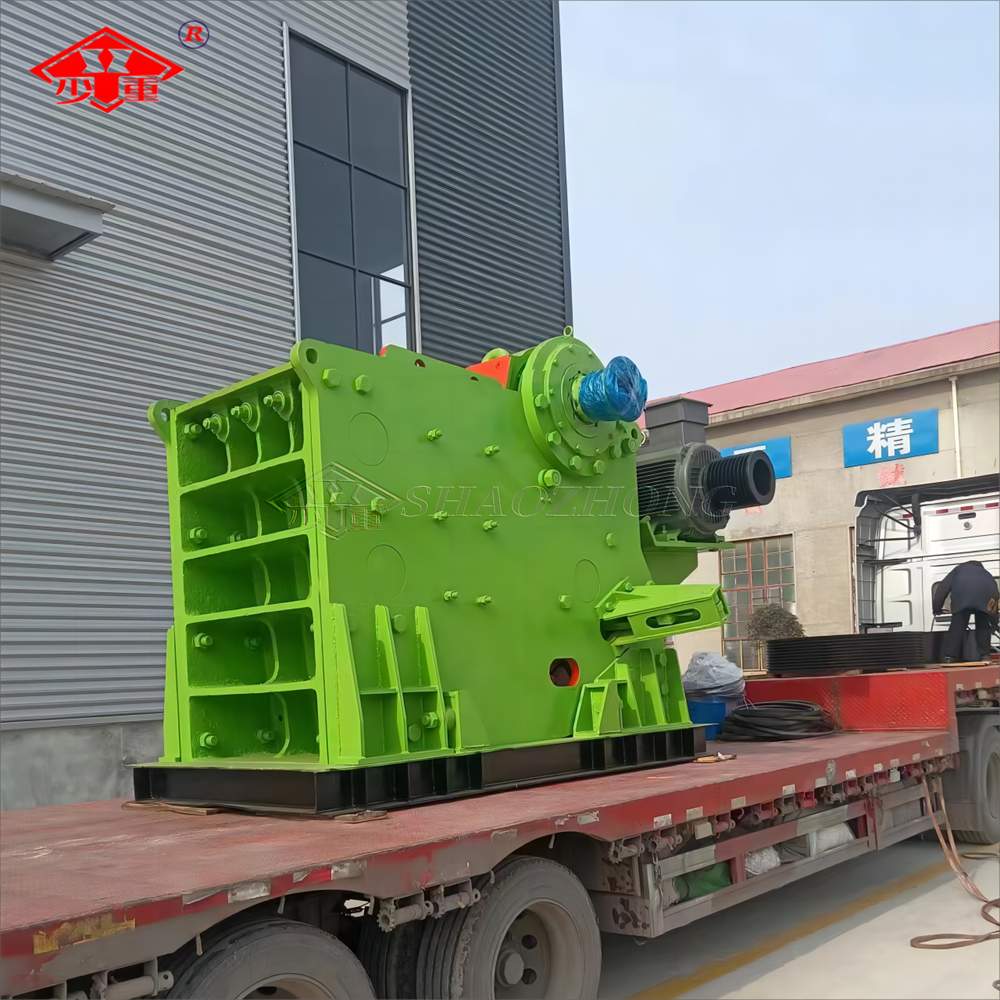
The reason why jaw crushers are favored in the initial breaking of mines
In the process of mineral resource development and utilization, crushing operation is one of the key links in the mining production line, and its efficiency and quality also directly affect the subseq...
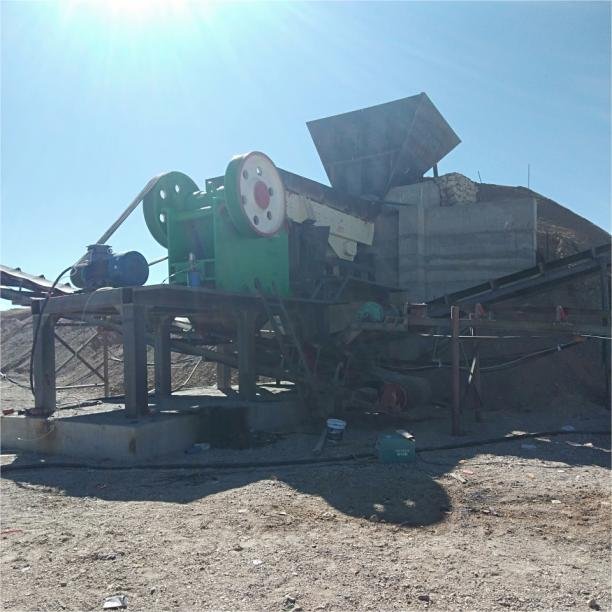
How to reduce the maintenance cost of jaw crusher
The jaw crusher is a crusher that simulates the movement of the two jaws of animals to complete the material crushing operation. It is a widely used crushing equipment, according to different series, ...

How to Enhance the Ore Processing Efficiency of Ball Mills
Ore production lines have the characteristics of complexity, efficiency, environmental protection and automation, and with the advancement of science and technology and the improvement of environmenta...

The new generation of intelligent jaw crushers has been officially launched, delivering a 25% increase in crushing efficiency.
Recently, our company formally introduced the new generation of intelligent jaw crushers. As a core upgrade product for the primary crushing stage in mining operations, this model achieves comprehensi...
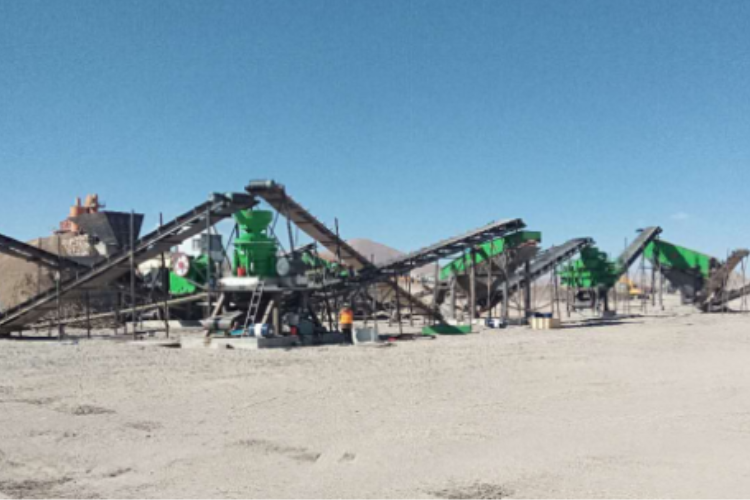
100-150t fixed production line: the best choice for medium-sized sand and gravel projects
In the sand and gravel aggregate industry, a production line with an output of 100-150 tons per hour is a typical "medium-sized" configuration. This capacity range not only meets the normalized demand...

What equipment comprises an ultrafine grinding mill production line?
The SLVTM Micro Powder Ultra-Fine Grinding Mill is a novel piece of equipment designed through the assimilation of foreign technology. It achieves the desired fineness (325–3000 mesh) by grinding mate...

80-100t Fixed Production Line Equipment Composition and Line Configuration Plan
In the sand and gravel aggregate industry, the production line with an output of 80-100 tons per hour belongs to a typical "small scale" configuration. Although this capacity range is not large, it oc...

What are the common crusher models, prices, and specifications?
Crushing machines are employed to reduce ore, concrete, and other construction materials into particles of specified size. They supply high-quality aggregate for industries including mining, construct...

How should one go about selecting sand-making equipment for a sand and gravel production line?
Within the sand and gravel processing industry, the double-roll sand-making machine serves as a highly efficient crushing apparatus, effectively meeting the sand-making requirements for various stone ...

Accelerated infrastructure development drives essential demand! A high-quality crushing production line has been established in Kyrgyzstan, filling a gap in the building materials market
Recently, as Kyrgyzstan's infrastructure construction enters a new phase of comprehensive acceleration, various local projects such as highways, railways, housing and social facilities have started in...

Deepening engagement in the calcium-magnesium-based materials ecosystem! Shaolin Heavy Machinery holds technical exchange event, showcasing its manufacturing prowess
It has also promoted the in-depth integration of mining equipment and ecological chain development, injecting new vitality into the transformation and upgrading of the industry. Wang Jinfa, Chairman o...

A delegation from the Zhengzhou Institute of Comprehensive Utilisation of Mineral Resources, under the China Geological Survey, visited Henan Shaolin Heavy Machinery for a research visit
In May 2024, a delegation led by Guo Zhenxu, Secretary of the Party Committee of Zhengzhou Institute of Comprehensive Utilization of Mineral Resources, China Geological Survey, Dr. Liu, Director ...